One of the most fascinating mysteries from World War II involves a pigeon that was discovered in a chimney decades after the war ended, still carrying a small capsule with an encrypted message attached to its leg. The story was reported by the BBC and describes how the bird was found with a coded note believed to have been sent from a British military person during the war (https://www.bbc.com/news/uk-20456782).
After reading the article, I became curious about the origins of the message. Who sent it? Where did it come from? And perhaps most intriguingly, what did the encrypted message actually say? This paper explores the historical background of the pigeon message and attempts to identify the likely sender and context in which it was written.
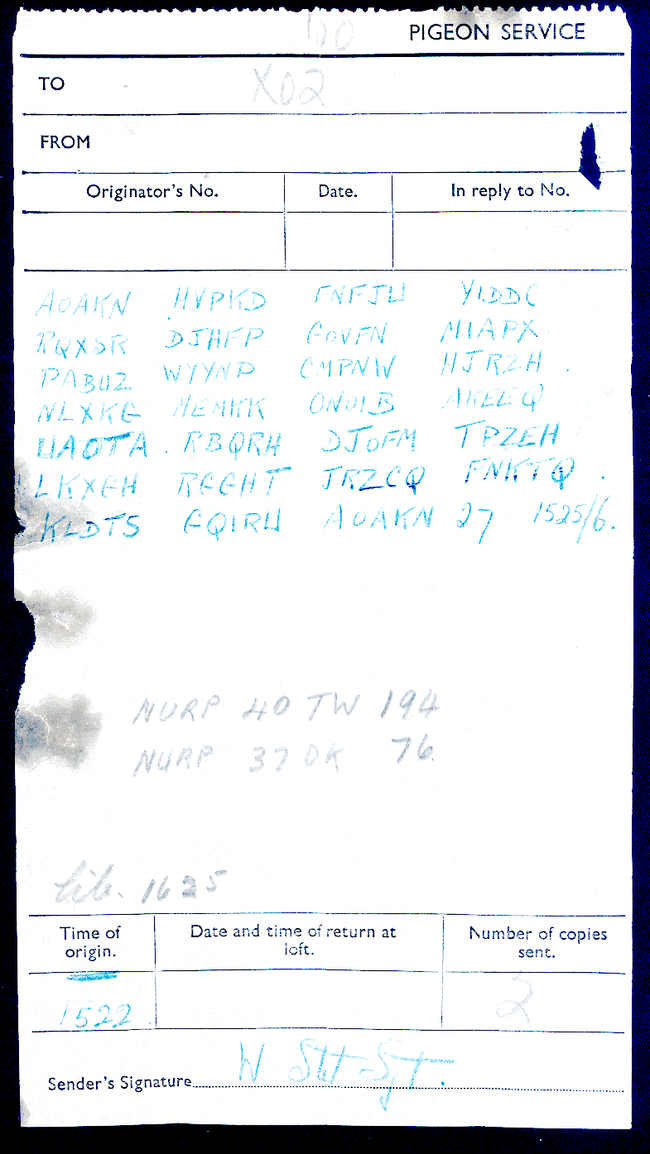
The paper attached to the pigeon was a small, thin piece of tissue-like paper that had been tightly rolled and placed inside a red capsule tied to the bird’s leg. Written on the paper was a short message composed mostly of groups of five letters, which appeared to be encrypted text. Above the coded groups were several identifiers, including references such as “AOAKN,” “NURP 40 TW 194,” and “Pigeon Service.” The structured format of the message suggests it was created using a military communication system, likely intended to be decoded by personnel at a British base who possessed the correct cipher key. Because the decoding materials were never recovered, the message has remained unsolved.
World War 1 or 2?
One clue that helps identify the time period of the message is the format of the communication pad used for the note. The message is written in groups of five letters along with several short identifier codes at the top. This format was commonly used in British military communications during World War II. Messages were often written in groups of five letters so they could be transmitted more easily and so that patterns in the text would be harder for enemies to analyze.
Another important clue is the marking “NURP” written on the paper. NURP stands for the National Union of Racing Pigeons, an organization that worked with the British military pigeon service during World War II. These pigeons were used by aircraft and other military units to send messages back to base if radio communication failed.
The structure of the message and the organizations referenced on the paper strongly suggest that the message was created during World War II rather than World War I. British aircraft operating over the Atlantic often carried pigeons as a backup communication method in case the aircraft was damaged or forced to ditch in the ocean.
Some researchers initially suggested that the message might date back to World War I. One Canadian researcher proposed that the coded groups of letters resembled artillery fire control messages used during the First World War. In this interpretation, the message might have contained targeting information for artillery units rather than an aircraft communication. This theory was discussed online by historians and puzzle enthusiasts who examined the structure of the coded groups and compared them with known military message formats.
One example of this interpretation can be found in discussions archived on the BBC puzzle pages, where a contributor suggested that the message format resembled older artillery spotting messages from the First World War. https://www.wired.com/story/pigeon-code-cracked/
WW1 American Army Field Codes: https://archive.org/details/american-army-field-codes-in-the-american-expeditionary-forces-during-the-first-world-war
However, most historians later rejected the World War I theory. The references to the National Union of Racing Pigeons and the style of the message form more closely match British military pigeon communication systems used during World War II. Because of these details, the majority of researchers now believe the message likely originated during the Second World War.
Who’s the Author?
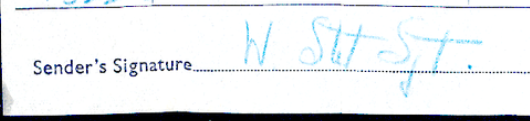
At the bottom of the message form there is a line labeled “Sender’s Signature.” Written in blue ink on that line appears to be the name “W. Stott Sgt.” The handwriting suggests the sender identified himself with the initial W, the surname Stott, and the rank Sergeant.
The name and rank are important clues. During World War II it was common for the sender of a pigeon message to sign the form so that the receiving station could identify the unit or individual who transmitted it. The rank Sergeant indicates the sender was a non commissioned officer rather than a commissioned officer such as a lieutenant or captain.
I searched www.cwgc.org and made a list of “W” “Stotts”. There are no matches for strictly “Stot”. The full list is the excel sheet I created. The best candidate with Sergeant is the one who served in the Royal Air Force and one promoted to Warrant Officer after his death in 1943.
| Name | Rank | Service Number | Unit | Country | Date of Death | Age | Burial / Memorial |
|---|---|---|---|---|---|---|---|
| William Leslie Stott | Sergeant | 508080 | Royal Air Force | United Kingdom | 08 May 1945 | 35 | Chester (Overleigh) Cemetery |
| William Stott | Warrant Officer | 407563 | Royal Australian Air Force | Australia | 04 October 1943 | 33 | Runnymede Memorial |
Two individuals named William Stott stand out as possible candidates connected to the pigeon message. Both served in air forces during World War II and both held ranks that could match the signature written on the message form.
The first is William Leslie Stott, who served as a Sergeant in the Royal Air Force. His service number was 508080, and records show that he died on 8 May 1945 at the age of 35. He is buried at Chester (Overleigh) Cemetery in the United Kingdom. Because the message signature appears to include the rank “Sgt,” William Leslie Stott is a possible match based on rank alone. As a member of the RAF, he may have been involved in communication duties or air operations where carrier pigeons were used.
The second individual is William Stott of the Royal Australian Air Force, service number 407563. He served as a Wireless Operator Air Gunner and held the rank of Warrant Officer at the time of his death on 4 October 1943 at the age of 33. His name appears on the Runnymede Memorial, which commemorates airmen who were lost with no known grave. Historical records show that he was part of the crew of Liberator FK923 of No. 120 Squadron RAF, which disappeared during an attack on a German submarine in the North Atlantic.
This second individual is particularly interesting because wireless operators were responsible for sending and receiving communications. If an aircraft became damaged or unable to transmit by radio, the wireless operator would likely have been the crew member responsible for preparing a message and releasing a carrier pigeon. For this reason, William Stott of the Royal Australian Air Force is often considered one of the strongest candidates for the author of the pigeon message.
Although both individuals match the name and wartime context, the connection between the aircraft loss in October 1943 and the role of a wireless operator makes the RAAF William Stott a particularly compelling possibility.
Hand Writing Analysis
One piece of evidence that may help narrow the search is handwriting. By reviewing handwriting samples from enlistment documents of the various Stotts who served during the war, we can compare their signatures to the one on the message and determine which individuals might be possible candidates.
It took some time to track down and sort through the available digital military records. We should be grateful that the British and Australian governments have made so much of this historical information available to the public. Research like this would have been much more difficult to carry out years ago.
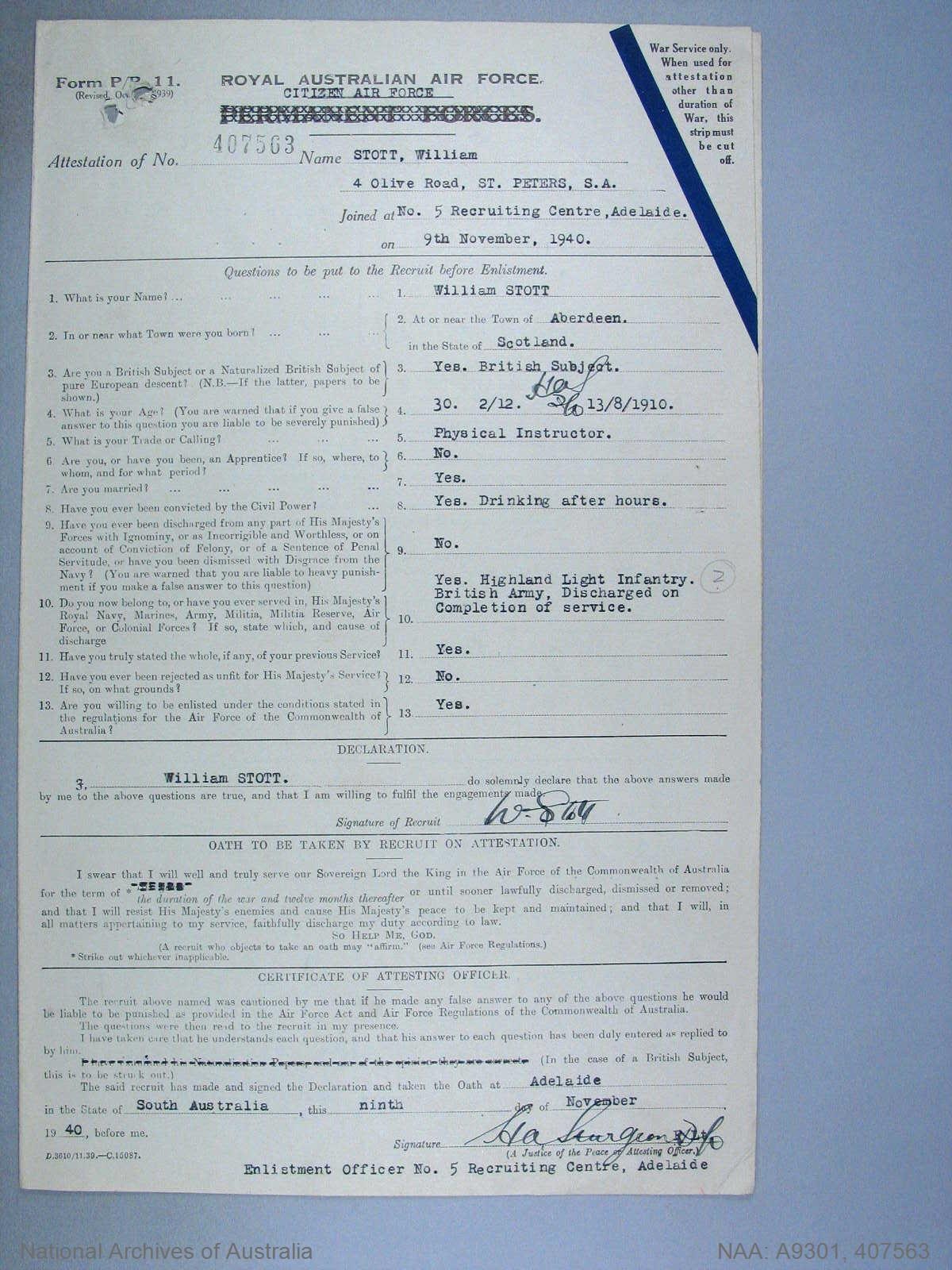
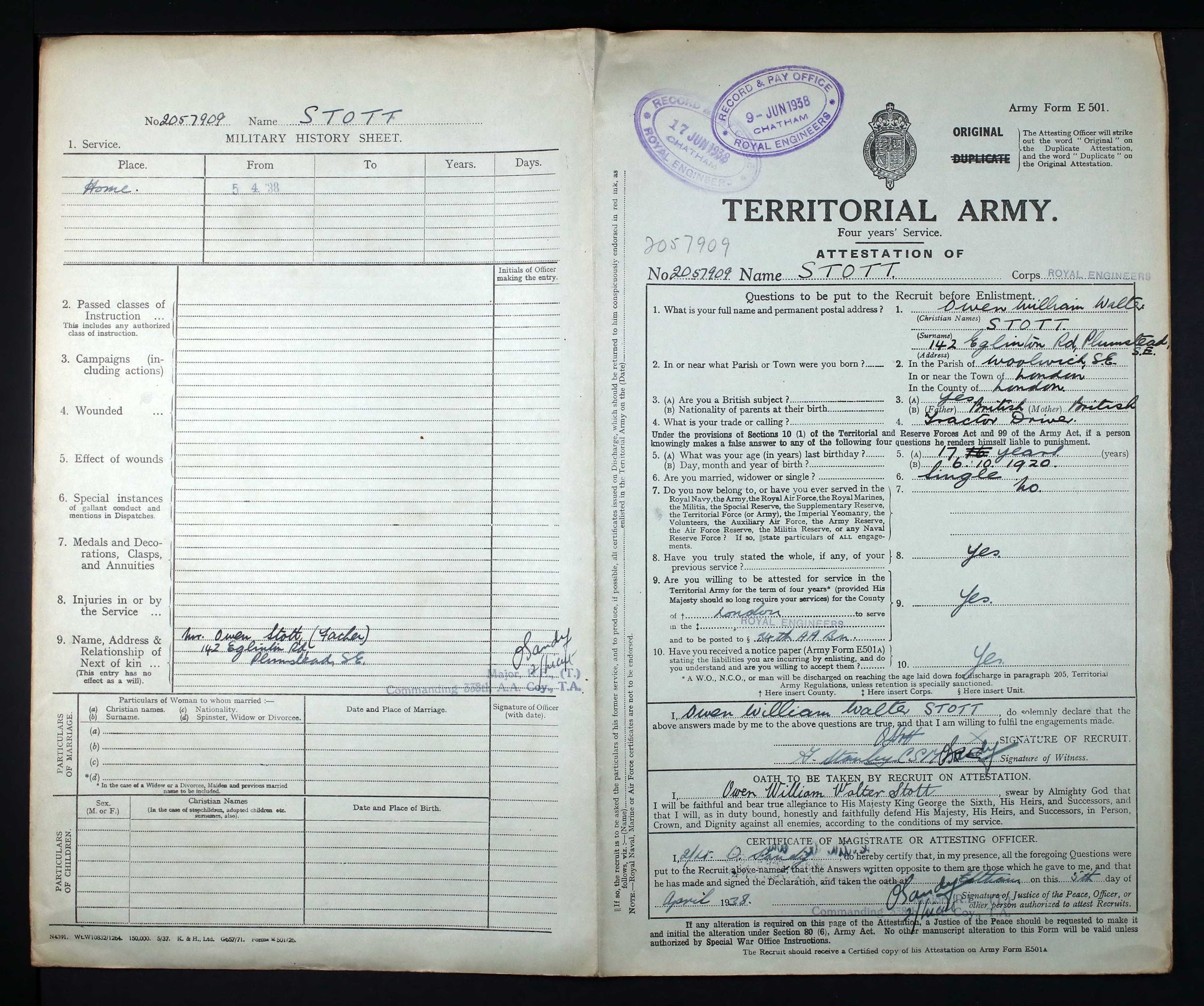
We have the original message handwriting and several options



We now have the original handwriting from the message along with several possible individuals to compare it to. For this comparison, I used the original signature from the message, a neutral reference sample from W. O. Stott of London, and our strongest suspect, W. Stott of the Royal Australian Air Force from Adelaide.
A comparison of the handwriting suggests that the Australian W. Stott signature is the closest match to the handwriting on the original message. The message signature begins with a tall, angular capital “W” followed by a shortened or simplified form of the surname that appears as “Stt.” The style is quick, somewhat block-like, and the letters are not fully connected. When compared to the enlistment documents, the Australian W. Stott signature shows several similar characteristics. The capital “W” is formed with similar sharp upward and downward strokes, and the overall structure of the name is compact, suggesting a writer who might abbreviate or simplify letters when writing quickly. This could explain why “Stott” appears shortened in the message. In contrast, the signature attributed to Owen William Walter Stott from London is written in a much more flowing cursive style. The letters are fully connected, the loops are more rounded, and the surname “Stott” is clearly written out with distinct letter forms. Because the London signature shows a more decorative and continuous writing style that differs significantly from the simpler and more abbreviated form seen on the message, it appears less consistent with the handwriting on the original note. While this visual comparison cannot serve as a formal forensic identification, the structural similarities in letter formation and writing style make the Australian W. Stott the more plausible handwriting match to the message signature.
With handwriting analysis, we observe the following:
Capital “W” Formation
Message signature
- Tall capital W
- Formed with three sharp angular strokes
- Slight rightward lean
- Ends with a small upward exit stroke
Australian W. Stott
- Very similar angular W
- Also constructed with distinct pointed peaks
- Same rightward slant
- Final stroke lifts slightly upward
Interpretation
The structure and stroke sequence of the W are highly consistent. Many writers produce rounded or looped W’s, but both samples show angular mountain-style W formation, which is a useful comparison feature.
Simplification of “Stott”
Message
Appears as:
Stt
or a compressed form of Stott.
Characteristics:
- Very short middle section
- The “o” loops appear omitted
- Final t stroke is emphasized
Australian signature
- “Stott” is written more formally
- However the middle letters are compressed
- The t strokes dominate the word visually
Interpretation
When people write quickly or under stress, interior vowels are often minimized or skipped. The Australian signature already shows compressed middle letters, which could easily reduce to “Stt” in fast writing.
Letter Spacing
Message
- Letters are slightly separated
- Not fully cursive
- Appears written quickly
Australian
- Semi-cursive
- Letters almost connect but not fully
- Slight pauses between name components
Interpretation
Both samples show partial connection rather than full cursive flow, suggesting a writer who mixes print and cursive habits.
Stroke Pressure and Rhythm
Message
- Heavier strokes on W and t
- Lighter strokes between letters
- Indicates fast writing with emphasis on capitals and final letters
Australian
- Similar emphasis pattern
- Capital and cross strokes heavier
- Interior letters lighter
Interpretation
This pressure rhythm is consistent between the samples.
Terminal “t” Style
Both signatures show:
- A firm final t
- Slight upward finish
- A confident stopping point
This is another behavioral writing trait that tends to remain consistent.
The handwriting in the message shares several similarities with the Australian W. Stott signature, including the angular capital “W,” compressed surname structure, and similar stroke patterns. While these features suggest the two samples could come from the same writer, this comparison is only a preliminary visual assessment. It is recommended that professional forensic handwriting analysts examine the original documents and conduct a full comparison to determine whether the signatures can be reliably attributed to the same individual.
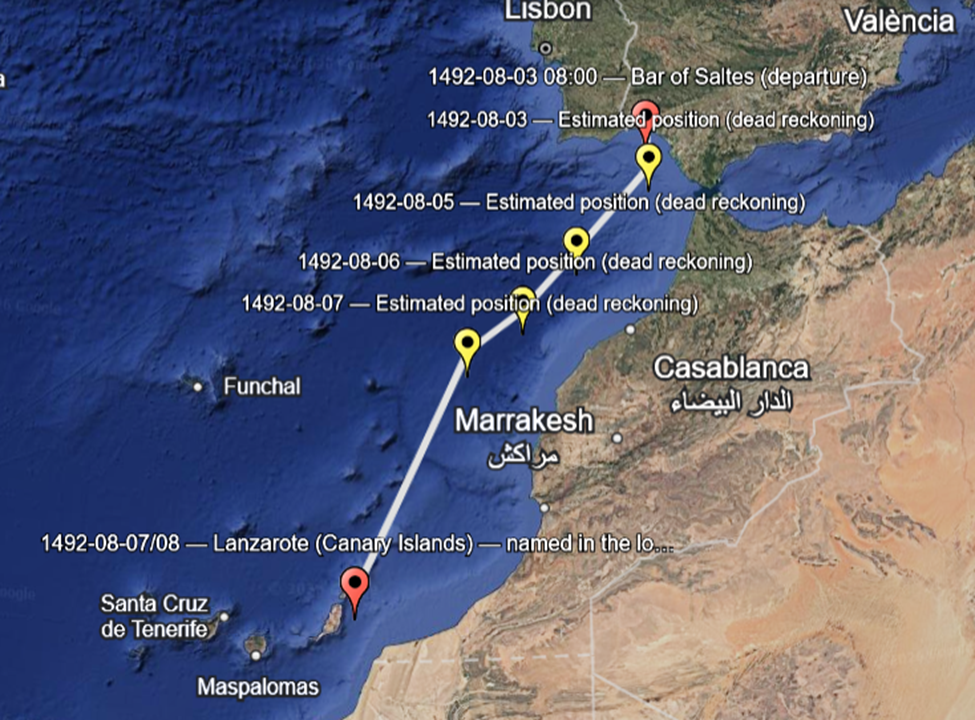
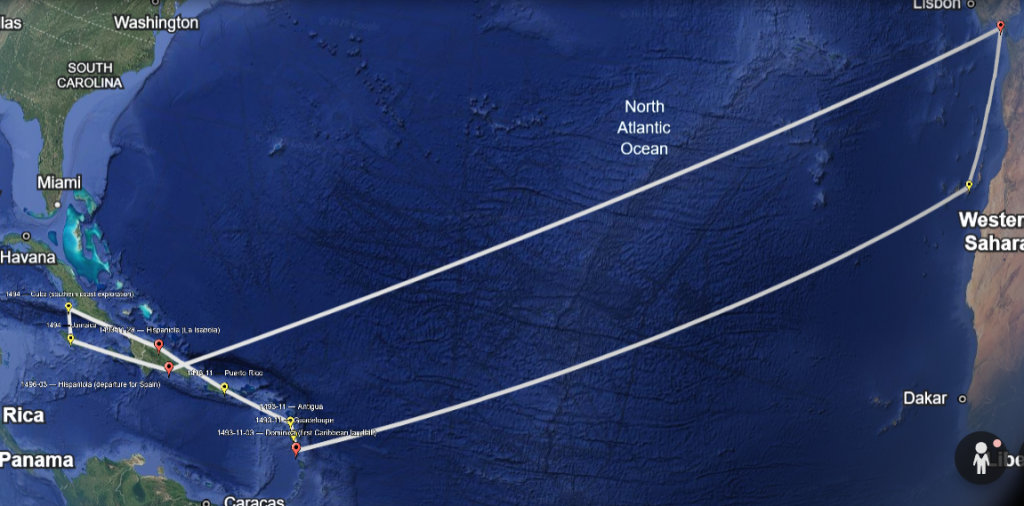
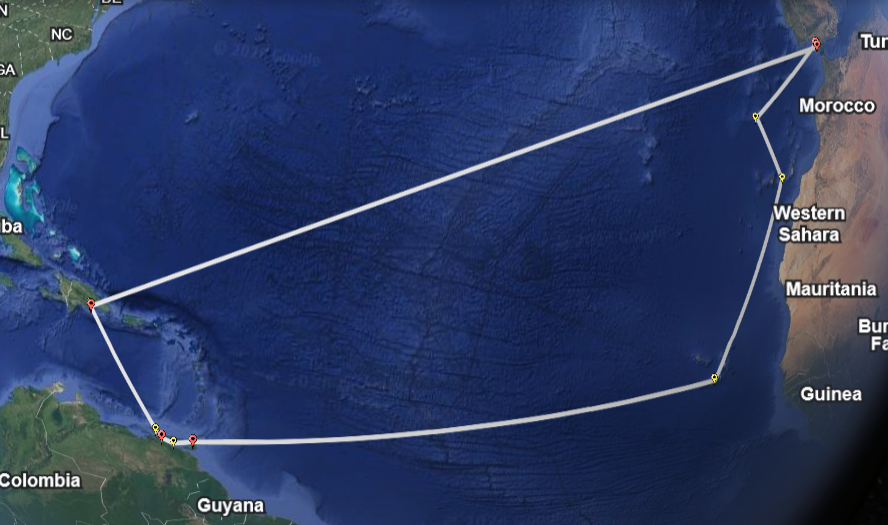
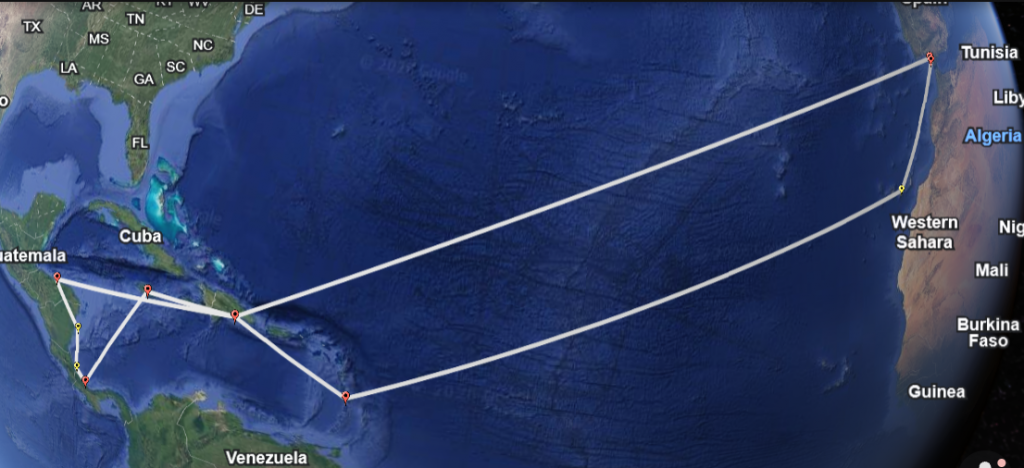
How did the bird make it back?
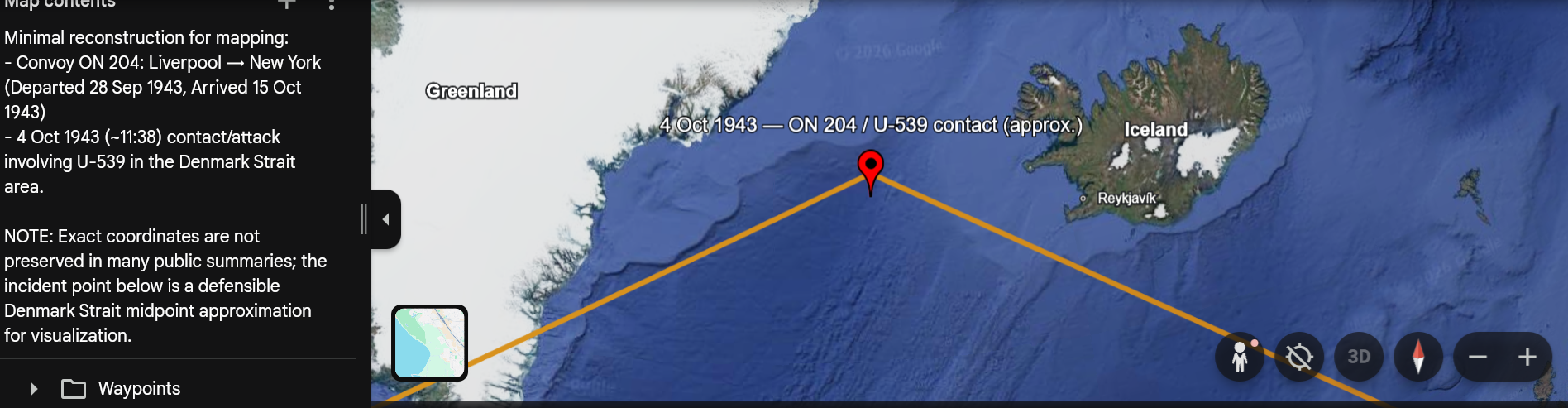
The reconstructed position of the aircraft also aligns with what we know from personnel records and squadron history. Records show that Warrant Officer William Stott of the Royal Australian Air Force had been transferred to No. 120 Squadron RAF, which was operating Liberator aircraft from RAF Reykjavik, Iceland as part of the North Atlantic anti submarine patrol effort. On 4 October 1943, Liberator FK923 departed Iceland to escort Convoy ON 204. Squadron reports state that at approximately 11:30 a.m. a signal was received from the aircraft indicating it was about to carry out an attack, believed to be against U boat U 539. The signal faded and nothing further was heard from the aircraft, which never returned to base. Subsequent searches found no trace of the aircraft or crew. This means that on that specific day in October 1943 the entire crew, including RAAF Warrant Officer William Stott, was lost during the patrol, placing him directly aboard the aircraft at the time the message and pigeon were likely released.
Why the One Time Pad Message Cannot Be Cracked
The coded message carried by the pigeon appears to use a One Time Pad (OTP) system, which was widely used by Allied forces during World War II for highly sensitive communications. A one time pad works by combining a message with a page of completely random numbers or letters called a pad. Each character in the message is altered using the corresponding character from the pad. The crucial rule is that the pad page is used only once and then destroyed. The receiver has an identical copy of the pad page, allowing them to reverse the process and recover the original message.
What makes this system unique is that, when used correctly, it is mathematically unbreakable. Unlike other codes, there is no pattern for a computer or codebreaker to analyze. Every possible decoded message is just as likely as any other unless the correct pad page is known. In simple terms, it is like trying to guess a password that is completely random and just as long as the message itself. Even if someone used the fastest computers in the world, they would still be guessing blindly because there is no statistical clue pointing to the correct answer.
For this reason, the pigeon message cannot realistically be decoded today. The aircraft that carried the pigeon would also have carried the matching pad page used to encode the message. When the aircraft was lost in October 1943, that page of the pad was almost certainly lost with it. Without that specific page, the encoded text cannot be reversed. This means the message remains effectively locked forever unless the original pad page is somehow discovered, which is extremely unlikely.
This explains why, despite decades of effort by historians and cryptography enthusiasts, the pigeon message has never been successfully decoded. The security of the one time pad system means that the message is not merely unsolved; it is designed to be impossible to break without the original key.
Final Thoughts
In conclusion, the investigation narrowed the possible author of the pigeon message by systematically identifying and evaluating potential candidates named Stott who served during the war. Early on, it became clear that the message was not from World War I, as the use of coded pigeon message pads corresponds with British military pigeon communications used during World War II. With that timeframe established, attention focused on individuals who both served during the period and were in positions where sending such a message would make sense. Among the candidates examined, William Stott of the Royal Australian Air Force emerged as the strongest match. Records show that he served as a Wireless Operator Air Gunner with No. 120 Squadron operating from Iceland, placing him directly in aircraft responsible for anti submarine patrols and convoy protection. Squadron logs confirm that on 4 October 1943 his Liberator aircraft attacked U boat U 539 while escorting Convoy ON 204, after which the signal faded and the aircraft never returned. This scenario provides a credible moment in which an emergency pigeon message could have been released. Finally, a comparison of the handwriting on the message with known enlistment signatures showed notable similarities in the structure of the capital letters and the abbreviated style of the surname. While a definitive determination would require professional forensic examination, the combination of historical context, operational role, documented loss of the aircraft, and preliminary handwriting comparison makes William Stott the most plausible candidate identified in this investigation.